Latest Carbon Performance data for steel and diversified mining now available
08 July 2026
Covering 40 steel and 11 diversified mining companies
Covering 40 steel and 11 diversified mining companies
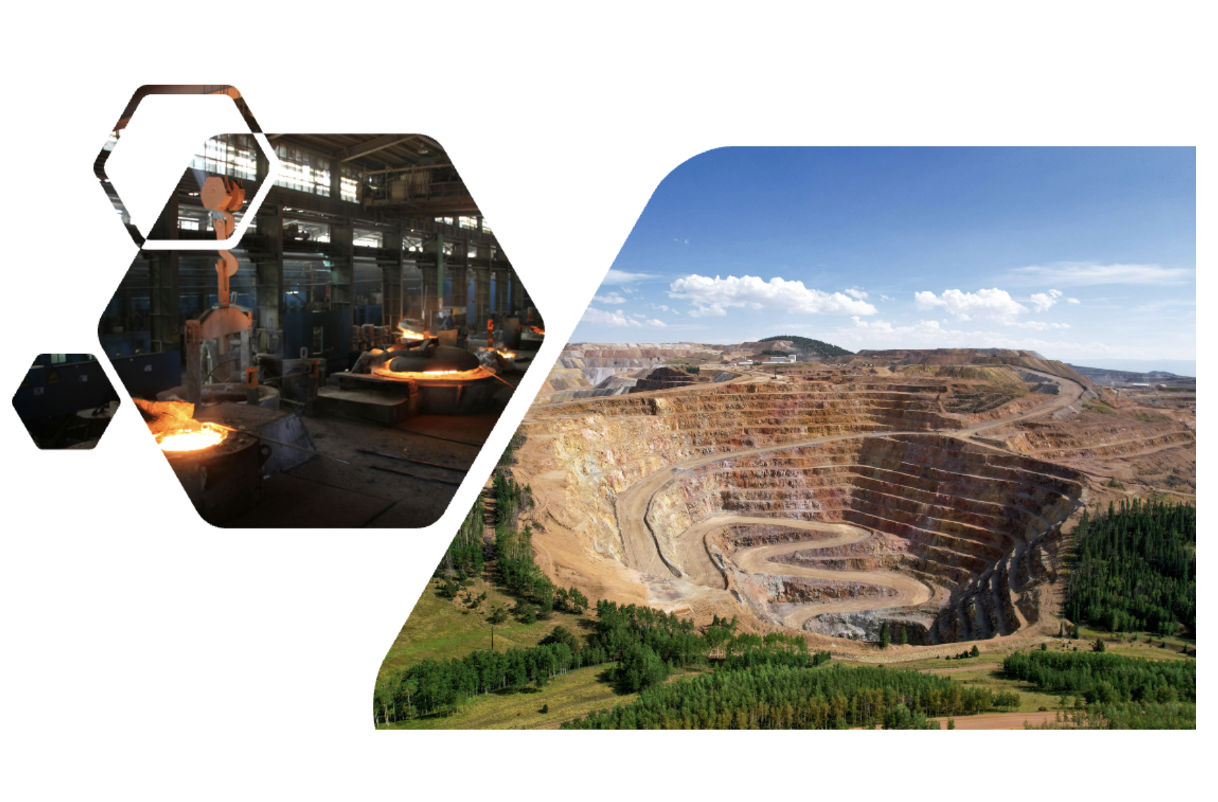
The latest Carbon Performance data for the world’s largest steel and diversified mining companies are now available. This update covers 40 steel companies and 11 diversified mining companies1. As of June, these steel and diversified mining companies represent a combined market capitalisation of over $436 billion and $394 billion, respectively2.
According to the International Energy Agency (IEA), in 2024, the steel industry accounted for 8% of total energy system emissions. The International Council on Mining and Metals (ICMM) noted that the global mining and metals sector was responsible for 11% of total global greenhouse gas (GHG) emissions in 2024. Both sectors are critical enablers of the low-carbon transition, supplying the steel and critical minerals needed to build low-carbon infrastructure.
The TPI Global Climate Transition Centre (TPI Centre) is excited to introduce split emissions intensity benchmarks for primary (blast furnace) and secondary (electric arc furnace plus scrap steel) steelmaking. Primary steelmaking is over four times more emissions-intensive than secondary today, and the two routes follow different decarbonisation pathways.
Companies are still assessed against the existing combined benchmark. The new split view is offered as a complementary lens, particularly valuable for companies with a high share of secondary production or those transitioning between routes.
The TPI Centre methodology assesses historical and projected GHG emissions, comparing them against sector-specific benchmarks to evaluate their alignment with the goals of the Paris Agreement.
The TPI Centre is the academic partner of the Transition Pathway Initiative (TPI), a global investor-led initiative supported by over 155 asset owners and asset managers. Based at the London School of Economics and Political Science (LSE), it is an independent and authoritative source of research and data on the progress being made by corporate and sovereign entities in the transition to a low-carbon economy.
1 These assessments cover TPI companies outside the Climate Action 100+ (CA100+) universe, allowing earlier publication of results. This ensures investors have up-to-date data well ahead of the typical Q3 publication of CA100+ company assessments.
2 Market capitalisation coverage is calculated for the companies for which this sector represents their primary activity. The calculation can change due to fluctuating corporate valuations, the size of the company universe assessed, or due to company sectoral reclassifications. Companies with a Not Assessed alignment were excluded from the total market capitalisation.